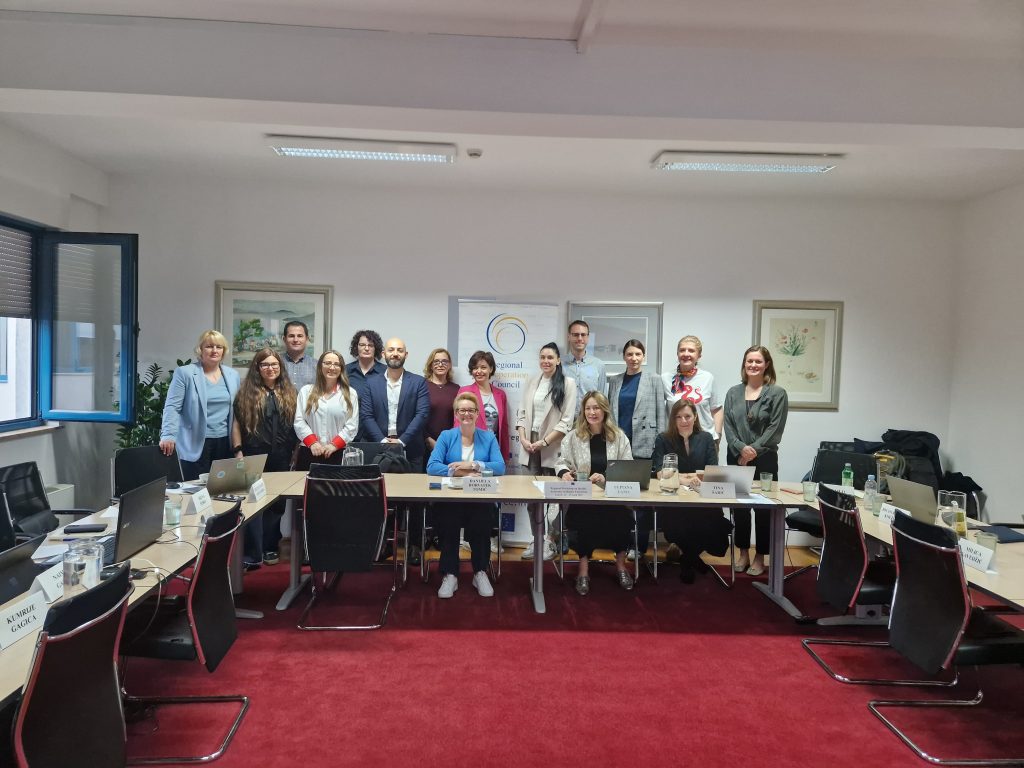
On April 24–25, 2025, a regional workshop titled “Strengthening QA Agencies in the Western Balkans: Tools, Compliance & Readiness for ENQA” was held in Zagreb, organized by the Regional Cooperation Council (RCC), in partnership with the Agency for Science and Higher Education of Croatia (ASHE) and the Education Reform Initiative of South Eastern Europe (ERI SEE).
The workshop brought together representatives from quality assurance agencies in higher education from Serbia, Croatia, Bosnia and Herzegovina, North Macedonia, Montenegro, Albania and so-called Kosovo*. The key focus areas were internal and external evaluation mechanisms, compliance with the European Standards and Guidelines (ESG), and preparation for ENQA reviews.
The Croatian Agency for Science and Higher Education (ASHE), a long-standing ENQA member, shared valuable insights and experiences, particularly relevant for agencies currently seeking ENQA membership. This followed a previous visit by an ASHE representative to NEAQA in December 2024, further strengthening cooperation and knowledge exchange.
The National Entity for Accreditation and Quality Assurance in Higher Education of Serbia (NEAQA) actively participated in the event. NEAQA representatives presented ongoing activities, key challenges, and planned steps within their action plan for ESG alignment. This was an excellent opportunity for peer exchange and learning from the good practices of neighbouring agencies.
Throughout the two-day program, participants engaged in interactive group sessions, discussed self-assessment approaches, and explored actionable strategies for improving internal quality assurance systems. The event contributed to strengthening regional cooperation, enhancing mutual understanding of quality assurance standards, and building trust among quality assurance agencies in the Western Balkans.
A key added value of the workshop was the set of interactive sessions, which allowed participants to engage in group work analyzing the challenges and opportunities related to self-evaluation processes. During the session led by ERI SEE, participants collaboratively worked on the self-evaluation report. On the following day, they presented the results of their analyses and exchanged ideas for improving internal quality assurance mechanisms. The final session of the workshop provided space for joint reflection and conclusions, led by ASHE and ERI SEE.
The workshop significantly contributed to strengthening regional cooperation, fostering a shared understanding of standards and expectations, and building trust among the agencies in the region.